
AKA, my Good to Go book review.
In my blog about the overview of running injuries, we mention Recovery as one of the important building blocks and ask, "Is it over-training or under-recovering?" Either way, if you want to avoid a running injury, your training can't outpace your recovery. In hopes of training harder or more frequently, athletes have begun focusing on active recovery techniques to speed up the recovery process. But which products and activities lead to improved recovery, and which are a waste of time? And can some techniques actually impede recovery?
Thankfully we don't need to spend months researching active recovery options for ourselves. As mentioned in my other post, Christie Aschwanden has done this hard work for us in Good to Go: What the Athlete in All of Us Can Learn from the Strange Science of Recovery. This awesome book was published in 2019 but I only discovered it a year or two ago. I've re-read it a few times and will reference it for years to come.
Aschwanden is not only a journalist & science-writer, but also a high-performing athlete in her own right as a competitive Nordic skier, cyclist, and trail runner, making this topic relevant for her. I'm going to share a few of my favorite bits from each chapter, but I strongly encourage you to read this book for yourself.
If you've worked with me or followed my socials for a while (previously 'Dr. Kasey Hill' accounts... but please, switch over to @PRMDrunning) then you likely know a few things about me: I love research-based info over opinions, I'm skeptical by nature (aren't all scientist supposed to be?), and I'm pretty frugal, both with my own money and my patient's. So a book reviewing the actual scientific evidence, or lack thereof, behind all the flashy and expensive recovery methods available is right up my alley!
As an athlete, you are constantly bombarded with promises of miraculous drinks and revolutionary gadgets (and questionable medical treatments), and I share Mrs. Aschwanden's goal of helping you navigate through the noise and rely on evidence-based practices.
Please note, this is a several hundred page book and I'm only highlighting a few of my favorite bits from each chapter. If you have an interest in learning about athletic recovery, then I strongly suggest reading the book for yourself.
Intro (when did recovery become something to do?)
For the short attention span crowd, just hang on for a few more sentences. Aschwanden makes her most important point in the intro, noting that 10 - 20 years ago, recovery was a noun - a state of being, like "I am recovered" from my workout, etc. But over the last 10-ish years recovery has become a verb, "I need to do my recovery."
Workouts stress our bodies and muscles, and after we recover we gain a little strength and fitness thanks to super-compensation. We used to just let passive recovery happen by simply resting and avoiding more exercise. But for impatient, type-A personality athletes, why wait around for recovery when we can work on active recovery instead?
Here is a typical example from a blog post that offers a different opinion:
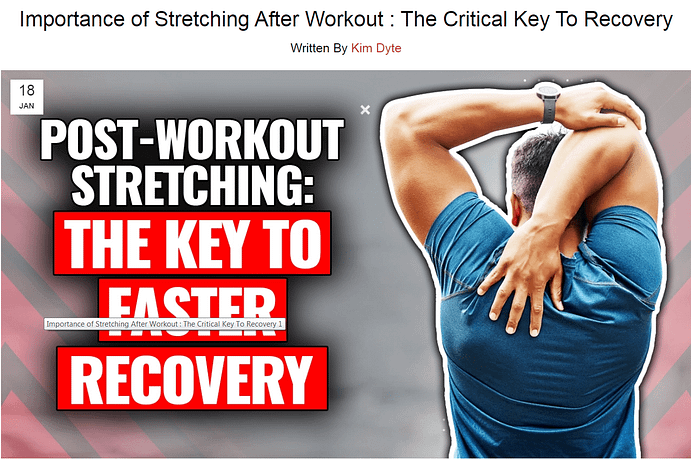
The last chapter of Good to Go may have a different opinion.
Per Aschwanden, “Whether it's a magic drink or a space-age gadget, we’re suckers for a good sales pitch, especially one that promises that it can make us better than we were before.”
Best line - “When recovery becomes a new chore, does it steal time away from real restoration?” Great question Christie!
Chapter 1: Just-so Science (beer for recovery & the scientific process)
Aschwanden entertainingly explains how scientific research studies should work ideally, and how they sometimes go off the rails. She uses an example that our Baton Rouge advanced class will appreciate, exploring whether beer is a good recovery drink (shoutout to the #PRbeerclub).

Athletes need to be critical consumers, questioning whether the solutions presented truly have scientific support. And so do doctors and coaches, myself included! I remember reading and quoting stories about a study that showed a post-exercise pint of beer hydrated athletes better than water. While trying to find the actual study to link, I instead only found layperson articles, and then I found this - Why Beer Doesn't Make a Good Sports Drink - which explains that not only was the study never published, but the lead author notes the media blew his findings our of proportion (beer was about equal to water, not better).
Aschwanden details how they set up their own study looking at beer for recovery and running performance, describes its strengths and interesting findings, and then describes its many weaknesses which may not be obvious at first glance. The biggest issue, which applies to the majority of studies on active recovery modalities for athletic performance, is that small sample sizes often give false positive results - showing effects that don't really exist.
She also explains how "just-so stories" are created to explain the data rather than seeing if the data supports or refutes the hypothesis. Best line - “Sprinkle an appealing idea with a dash of science, and it can seem more powerful or true than the evidence really shows. But good luck overturning an idea once it's become part of sporting lore.”
Chapter 2: Be Like Mike (sports drinks & hydration hype)
Science doesn't sell products, but stories and athlete endorsements do. Aschwanden exposes the questionable influence of marketing on sports drinks, revealing the limited evidence supporting their benefits. Thirst, our natural indicator that has served us through millions of years of evolution, is no longer reliable according to Gatorade.
Gatorade takes off, introduces the word electrolytes to the general public to sound more sciencey, and sports drinks become big business. The American College of Sports Medicine gets heavily endorsed by Gatorade, and now I have to worry about runners dying from hyponatremia (drinking too much water) rather than just finishing their race a little dehydrated (elites can lose up to 10% of their body weight without affecting performance!).

Best line - “”As it turns out, if you apply evidence-based methods, 40 years of sports drinks research does not seemingly add up to much,” Carl Heneghan and colleagues published in BMJ in 2012."
Chapter 3: The Perfect Fuel (nutrient timing = overcomplication)
Nutrient timing has long been considered crucial for exercise recovery, but Aschwanden challenges this belief. "That carbs and protein are important for recovery is pretty certain, but the optimal amount and timing is less so." - Aschwanden. She delves into the research of Dr. Brad Schoenfeld (a great social media follow), questioning the existence of a narrow post-exercise anabolic window.

His research concluded that the evidence didn't suggest the existence of a narrow window. The original studies weren't even set up to compare timing...they compared protein to no protein (placebo)... which proves protein helps but doesn't say anything about timing. Schoenfeld says, "It's an anabolic barn door".
Best line - "What becomes clear when you look at the history of sports nutrition is that what's considered the perfect food to go with exercise is determined as much by culture and tradition as by science."
Chapter 4: The Cold War (ice is out, or at least it should be)
I admit that I still bring ice bags to races, because 1) it's 100% expected of me, and 2) there honestly isn't much else I can do to help your painful IT band or sprained ankle feel better quickly. But as I'm applying the ice, I'll probably explain that it doesn't help, and may actually hinder your recovery.
In this chapter, the promise of faster muscle recovery from an ice bath or cryochamber comes under scrutiny. Aschwanden reveals that the perceived benefits might be more psychological than physiological. The active placebo effect (the more painful the treatment, the better it must work, right? RIGHT?) likely produces a larger subjective effect.
Dr. Mirkin popularized the 'Rest Ice Compression Elevation - RICE' method in the 70s, but since the early 2010s has been denouncing icing. Best line - "Anything that reduces your immune response will also delay muscle healing," Mirkin says. While I never recommend ice baths for training purposes, or almost any injury, it may have some benefit on subsequent running performance when racing back-to-back days.

Chapter 5: Flushing the Blood (do you need to 'realign your fascia,' 'flush toxins,' & 'improve your circulation'?)
Various products claim to boost blood flow, from deep tissue massage to compression gear. Aschwanden questions the evidence behind these practices, again emphasizing the importance of relying on methods supported by research.
Best line - ""There are very few evidence-based benefits for massage," says Paul Ingraham, a massage therapist and publisher of PainScience.com" (a great resource). ""There are about 100 popular reasons people give for why massage is good, and I think about 98% of them are nonsense.""
Look, massages feel great and if you enjoy them, go for it. Just don't buy into stories that you're 'removing lactic acid to prevent delayed onset muscle soreness' or 'improving blood circulation' or having any sort of physiologic change that we can measure. The same goes for self-massage with things like foam rolling.
Ten years ago we were all talking about foam rollers, self-myofascial release, and manual therapy breaking up adhesions and realigning connective tissue. Now such statements are a dead giveaway for people not keeping up with research. Our current best guess is that foam rolling most likely works on a neural level to temporarily reduce muscle tone & increase range of motion. We still teach it in PR Running, but we certainly don't oversell its benefits.

Last week a patient asked me if she made a smart investment in her NormaTec boots. I was happy to learn that the popular recovery boots were designed by a fellow PM&R doc to help venous and lymphatic drainage in patients with vascular disease. They were not designed with healthy 18-year-old collegiate runners like my patient in mind. Although they feel good, studies are mixed on whether they help people with normal blood flow. At least the time that athletes spend in these dynamic air compression devices is time away from more exercise.
I find it ironic that many active recovery tools allegedly increase blood circulation. Since one of my coached athletes is a vascular medicine specialist, I asked her about the risk factors for circulation issues, wondering if a lack of frequent massage and not using recovery boots were the biggest risk factors. Turns out smoking, diabetes, chronic kidney disease, high blood pressure, and advanced age are the actual risk factors. People who eat a healthy diet, and occasionally get their heart rate up with even light activity are already doing the essential things to improve blood flow.
If you want to increase blood flow & 'flush' your muscles, all you need to do is exercise!
Chapter 6: Calming the Senses (learning to relax is a good thing)
Relaxation techniques, float tanks, and meditation are explored in this chapter. Aschwanden advocates for genuine rest, emphasizing the potential benefits of true relaxation over potentially placebo-driven practices.
Essentially, it's ok to take some of the 'active' out of active recovery. I believe some of these practices are beneficial. Learning to 'turn off' by decreasing sympathetic tone (fight or flight) and increasing parasympathetic tone (rest & digest) on occasion has many benefits for overall health and well-being.
Chapter 7: The Rest Cure (sleep = recovery)
In this chapter, Aschwanden emphasizes sleep's unparalleled benefits and cautions against falling for trends like fancy pajamas and sleep trackers without addressing the fundamental importance of quality sleep.
Best line - "The benefits of sleep cannot be overstated. It's hands-down the most powerful recovery tool known to science. Nothing else comes close to sleep's recovery-enhancing power. You could add together every other recovery aid ever discovered, and they wouldn't stack up."

Chapter 8: Selling Snake Oil (be cautious of supplements)
The book highlights the lack of transparency in the supplement industry. She warns athletes against falling for bold claims backed by sketchy science, emphasizing the need for critical evaluation before incorporating any supplements into their regimen.
She gives cautionary tales of athletes failing drug testing from tainted supplements, something that professional, collegiate, and high school runners should be very mindful of. I was also surprised to learn that there are about 23,000 ER visits per year from over-the-counter supplements. Best line - ""We just want to believe in magic," says Catherine Price, author of Vitamania, a history of vitamins and the supplement industry."

Chapter 9: Losing Your Zoom (overtraining syndrome is the worst)
In the scariest chapter of the book, she reviews the case of Ryan Hall (and others) as an example of overtraining syndrome. Unfortunately, we still don't have clear guidelines on how to diagnose or treat overtraining syndrome, so it is essential to try to prevent it from occurring in the first place.
She notes the body's ability to recover can be hindered by a multitude of factors- insufficient sleep, lack of rest between hard efforts, poor nutrition, infections, and psychological stress can all decrease recovery. Ryan Hall frequently skipped prescribed rest weeks. While you may see some physical fitness gains initially, you can only skip so many rest days before sports injuries start showing up and your health suffers. Remember that exercise breaks you down and rest builds you back up.
Chapter 10: The Magic Metric (listen to your body)
My coached runners will tell you that we mostly focus on RPE during runs, and after workouts I'm more curious about how they felt than I am about heart rate data or split times. Fortunately, this chapter supports our approach.
""We tend to think of objective measures as more reliable or scientific than subjective ones. " said Anna Saw, an Australian sports scientist who, in 2015, reviewed published studies on metrics used to quantify training load and response - hormone levels, inflammation markers, blood cell counts, immune markers, and heart rates. Analyzing all the data, athletes' subjective self-reported measures trumped objective ones."
Best line - "The fact that a whole industry has popped up to help healthy people find ways to feel anxious about their bodies seems like a statement about the weird times we're living in."
Chapter 11: Hurts So Good (placebos, NSAIDs, and stretching)
While we know that optimizing things like your endurance training schedule, nutrition, sleep, and strength training can make double-digit percentage improvements in performance, many athletes prefer to focus on the marginal gains they may get from products, supplements, and various forms of recovery tools. Most of these "beneficial" things show about 1 - 3% performance improvement.
We would assume that if they work through a physiologic mechanism, then using several different products would give an additive effect. However, that isn't usually the case. Adding product A's 3% improvement to product B's 2% and product C's 3% leads to a total measurable improvement of about 3%. This is a pretty strong indicator that most of the beneficial effects we see work through the placebo effect which only has so much room to improve.
This chapter reviews a few other topics that I frequently speak about as well - NSAIDs during races and stretching.
Despite recent research showing that NSAID use during ultra-running increases levels of inflammation and does not reduce soreness & pain, or improve performance, runners refuse to believe the studies. Taking NSAIDs before exercise can interfere with tissue repair and delay the healing of bone, ligament, muscle, and tendon injuries. During a long-distance event, these drugs increase the risk of kidney issues as well as the risk of rhabdomyolysis and hyponatremia. This is why I will never give you ibuprofen or naproxen at a race.
And finally, why do we still believe that runners need to stretch? "Reviews of the scientific literature on stretching have deemed stretching all but useless for recovery." Stretching has not been shown to improve performance, but may actually reduce running economy. It also does not affect muscle soreness or post-exercise recovery. Maybe use the time saved from not stretching to spend a few more minutes in bed - it will likely do you more good. Also, I still can't believe a franchise exists where people pay to get stretched.

Best line - "If a placebo ritual can provide a confidence boost, then (assuming it's causing no harm) why not let them have it?" Great advice, something I need to keep repeating to myself.
Conclusion:
"Good to Go" serves as a beacon of truth in the world of athletic recovery, urging athletes to prioritize science over hype. By adopting evidence-based practices and staying informed, athletes can maximize their recovery and health, enhance performance, and make informed choices in their quest for athletic excellence. I highly recommend this book and I hope she releases an updated version every 5 - 10 years!
Thanks for reading.
Happy Running & Recovering!
Kasey Hill, MD
Disclaimer
This website provides information only, and does not provide any financial, legal, medical or psychological services or advice. None of the content on this website prevents, cures or treats any mental or medical condition. You are responsible for your own physical, mental and emotional well-being, decisions, choices, actions and results. PR MD Running disclaims any liability for your reliance on any opinions or advice contained in this website. Kasey Hill MD is a medical doctor & running coach, but he is not your doctor or coach unless you become his patient or client by booking a medical or coaching consult, and he is not offering medical advice on this website. If you are in need of professional advice or medical care, you must seek out the services of your own doctor or health care professional.