
It's New Year's Resolution Time!
My original plan was to share this interview from a few years ago and expand on just a few topics, but this post kept growing like America’s waistline. The wonderful Gabby Brewster interviewed me for a WAFB segment about tips for exercise and weight loss as New Year’s resolutions. We had a great 20 - 30-minute conversation as Gabby, the producer, and other folks in the room kept asking questions and seeking advice as well. Of course, all of that got whittled down into a 90-second segment with a lot of nuance and other info left on the cutting room floor.
Besides my standard disclaimer at the end of this article, let me add that this article is for entertainment and educational purposes only and not medical advice. This is just my perspective as a sports doctor who is interested in nutrition and fitness. I can only give particular advice to people I consult with.
I’ve had my own weight loss journey and am still working towards my fitness and ideal weight goals. Just like experiencing multiple injuries led me to practice sports medicine, working to lose weight has contributed to a significant interest in nutrition and lifestyle changes. During my first year of med school, I topped out at 225 pounds with a BMI of 30.5. I was technically obese.
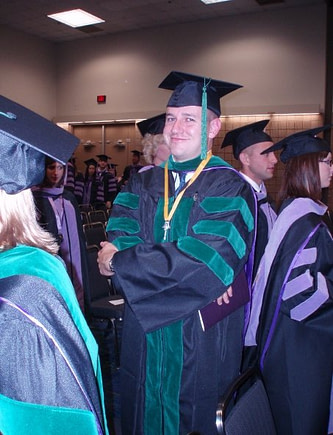
This was 2007, around 215 pounds. Look at those cheeks!
After many years of working on losing and then maintaining weight loss, I’m hanging out around 190 pounds with a desired body weight goal in the lower 180s.

Hanging out with Dr. Mark Cucuzzella at the Momentum in the Mountains health conference, summer 2023. Weight near 190.
I’ve also spent most of my career practicing in Alabama & Louisiana, two of the most overweight states in the country. While I treated some inspiring folks who have used running as a means to weight loss, I’ve treated many more people for arthritis, mobility issues, and other painful conditions that were likely related to their obesity.
I hate only treating symptoms without working on the root cause of a problem, so weight loss, diet, and exercise were discussed frequently in the clinic. A chunk of those visits were spent discussing the same misconceptions about exercise and weight loss over and over again, so this is my attempt to dispel some myths and hopefully help you on your journey to successful weight loss and optimal health.
Fitness, Exercise for Weight Loss, & New Year’s Resolutions
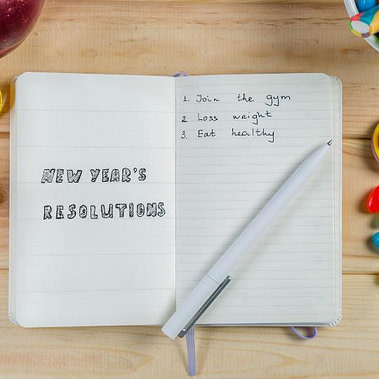
According to this Forbe’s survey, improving fitness is the number one New Year’s Resolution for 2024, with weight loss and improving diet being high on the list as well. Of course, most resolutions are abandoned by February, but for folks who are committed to improving their health and fitness, I’m happy to support you with this blog and a consultation if needed.
America’s (and the world’s) Obesity Problem
I’ve noticed a trend over the last few years of increased messaging about body positivity and “fat acceptance.” I worry that we’re going to make it harder to discuss things like body fat and weight loss for fear of being accused of “fat shaming.” I’ve heard stories of doctors saying awful things to overweight patients that did nothing to help them improve their health, but the opposite of this shouldn’t be pretending that obesity is healthy.
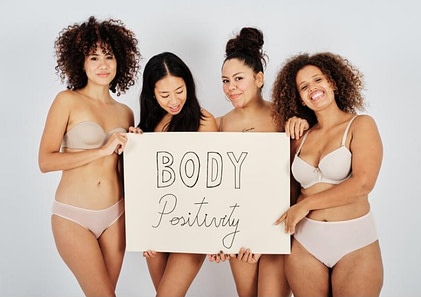
I agree with M. Javed Ashraf, MD, MPH, whose article title essentially says it all, There’s No Such Thing as “Healthy Obesity. We need to find a middle ground of accepting where we are on our weight loss and fitness journey while also working to improve our overall health.
Some of the most recent statistics show the magnitude of the obesity epidemic:
~ 30% are overweight. (BMI > 25) - FYI - I haven’t been below 25 since sometime in high school.
~ 40% of Americans have obesity. (BMI > 30)
~ 9% are severely obese. (BMI > 40)
Curious about where you stand? Find out here: BMI calculator.
While fat shaming isn’t helpful, we can’t ignore the science that overweight bodies come with a higher risk of:
- All-cause mortality
- High blood pressure
- High cholesterol / triglycerides
- Type 2 diabetes
- Sleep apnea
- Osteoarthritis
- Heart disease
- Stroke
- Body pains & decreased physical functioning
- Certain cancers
- The list goes on…
Resolve to Lose Weight
Hopefully, you are still reading because you are committed to working on sustainable weight loss with a big-picture goal of improving your overall health. While I don’t have a particular blue-print to give you, I do think there are some important keys to both add, and avoid, while working towards a healthy weight and improving physical fitness.
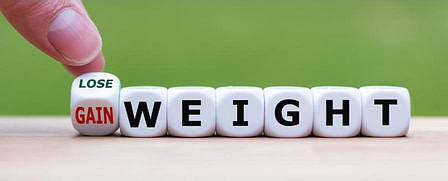
Ounces are Lost in the Gym, Pounds are Lost in the Kitchen
…or maybe by staying out of the kitchen, as the joke goes. I believe it's true that 80 - 90% of weight loss will come from diet changes and at most only 10 - 20% will come from exercise.
Fewer Calories is the Key to Weight Loss
If you want to drop pounds, you will have to take in fewer calories and maintain a negative energy balance for a while. Sorry, there just isn’t a way around this. Any diet or eating pattern that promotes weight loss does it through reduced energy intake. It doesn’t matter what you think about your metabolism, hormones, or genetics, if you aren’t losing weight it’s because your energy balance is neutral. And if you are gaining weight, it’s because you’re taking in more calories than you are burning.
But the devil is in the details, and there are some polarizing views and strong opinions on all sides, claiming their diet is the best and everyone else is wrong. It reminds me of the running shoe debate around 2010… ”shoes are the devil and barefoot will save us” vs “feet are pathetic and Hoka is our savior.” The good news is that there have never been more options to choose from and the bad news is that it may take some time to figure out what eating style works for you.
Caveat / Addendum (10/20/24): Runners actively training for a race should not try to lose weight simultaneously. Limiting calories will delay recovery and increase the risk of injuries, especially bone injuries. This advice may not apply as much to those with obesity, but I think more research is needed. Ideally, a runner will hold off on calorie reduction until the off-season / after race day.
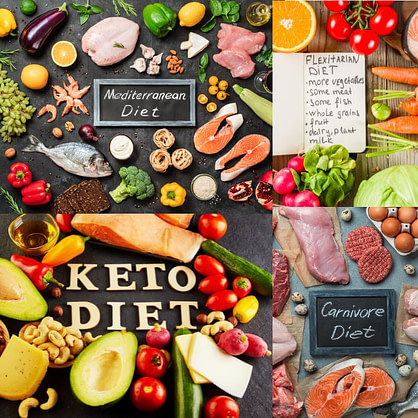
A million books & articles have been written on this topic and you can find a research study to support whichever diet you prefer. Please avoid the fad diets that promise quick success and think about what you’d be able to stick with for the long term. Regardless of what type of diet/nutrition plan you choose, you will need to maintain an overall calorie deficit until you reach your goal body weight and then adjust your calorie intake to maintain it.
So Many Diet Options…
For me personally, trying to reduce calories while eating a typical diet with moderate to high carbs leaves me hungry and even “hangry” at times. I drop weight more easily, feel better, and have less hunger when dropping carbs relatively low. I’ve tried versions of the Slow-Carb diet, modified Atkins diet, and Keto diets. At some point, I miss carbs and fall off the wagon.
Many dieticians would say that means my choice isn’t sustainable, but I’ve found that cycling between higher and lower carbs has helped me maintain my 35 - 40 pounds of weight loss for over 10 years. I use intermittent fasting as well, usually by skipping breakfast and only eating lunch and dinner. I’ve found what works for me and plan to keep experimenting with what helps me feel best.
You’ll need to do the same for you. I have friends who are happy raw vegans, skinny carb-loving athletes, hardcore keto advocates, and everything in between. Despite the differences in expert opinion on dietary patterns, there are a few points that most would agree on:
- Move away from the Standard American Diet, with the perfect acronym of the S.A.D. diet. It’s high in ultra-processed foods with a lot of added sugars and unhealthy fats and lacking in whole foods.
- Increase your whole food intake. The popular and well-researched Mediterranean diet is higher in whole foods such as vegetables, fruits, nuts, beans, whole grains, poultry, eggs, and seafood. Low-carb diets are high in meat, eggs, whole-fat dairy, and non-starchy vegetables. When in doubt, buy most of your food from the outskirts of the grocery store - fruits, vegetables, meat, dairy, seafood, etc, and less from the inner isles - boxed/packaged processed foods loaded with added sugars and/or unhealthy fats.

- Increase your protein intake. Protein is satiating, helping you tamp down on hunger, and requires more energy to digest than carbs and fats. Plus higher protein, in addition to exercise discussed below, helps you maintain lean body mass while losing fat mass. I recommend aiming for up to 1 gram of protein per pound of body weight.
- When in doubt, get professional help! At least 3 of my current coaching clients have worked with dieticians to help them with their weight goals (2 to lose, 1 to gain).
Caveat / Addended 10/20/2024: Based on new research, I would not recommend a low-carb diet for endurance athletes given its negative effect on bone remodeling and increased risk of bone stress injuries. Some carbs and electrolytes may offset this risk, but this is only my speculation. For multiple reasons, females should never exercise fasted.
I Run so I Can Eat What I Want To
I’ve heard this from many runners, most of whom are already at a healthy body weight. For those just starting on their weight loss journey, I strongly recommend focusing first on reducing calorie intake as discussed above rather than trying to increase calories burned. From a habit-forming and goal-achieving standpoint, you’re better off using your limited willpower to make healthy eating a habit for several weeks before tackling another change such as starting exercise.
(Note in my interview I say it takes about 3 weeks to create a new habit, but James Clear's article linked above states 2 months. James is more up-to-date on this than I am, so expect your healthy habits to take longer.)
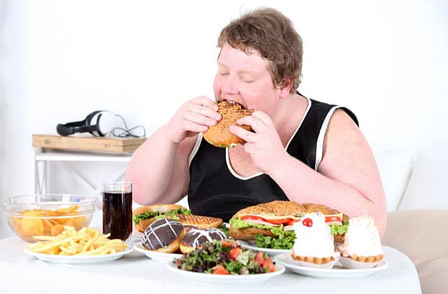
However, it seems the fitness industry has convinced many people that exercising to burn calories is the best way to promote weight loss. And maybe people believe that if they can burn enough calories then they won’t have to give up their unhealthy eating habits.
Calories In Is So Much Easier Than Calories Out
There are three main problems with focusing on an exercise for weight loss approach.
(addended 12/29/24) The first is maybe the only one that matters - research shows that when adjusted for body mass, humans living a hunter-gatherer lifestyle burn the same amount of energy per day as modern Westerners. And here is a take home quote from this (paywalled) article: "“We’ve done studies where we look at people who are really active,” including runners racing across America, Pontzer said, “and people who are really sedentary, and actually they’re burning the same number of calories,” which helps explain why people rarely lose much weight with exercise, even as the exercise makes them healthier."
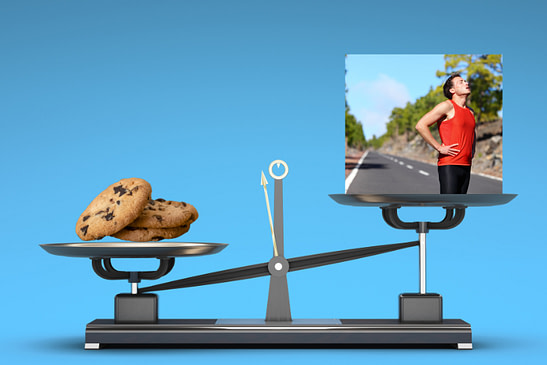
The second is that we usually overestimate how many calories exercise burns and underestimate how many calories we eat. An average-sized person burns about 100 calories for each mile they run. This may increase slightly for someone overweight, but not enough to make a big difference. Two Oreo cookies have 106 calories. It takes substantially more effort and time to run a mile than to gobble up two cookies.
I love cookies, and food in general, but I believe that it's a more economical use of your willpower to avoid the cookies (or any excess calories) than to make yourself run more miles.
Injury Setbacks won’t help you Lose Weight
The third big problem with trying to lose weight through exercise alone is injury risk.
I saw a yearly pattern in clinic, starting in mid-January, peaking in February, and then tapering off to normal levels by March - folks coming in with sprains, strains, and various aching joints from over-use injuries after jumping into exercise on January 1st. Sometimes it was a Couch to 5K program, but most often it was a version of a “boot camp” style training program or other intense exercise class.
“Doc, everything was going great. I dropped __ pounds in __ weeks and was feeling great until ____ started hurting and now I can’t even move.”
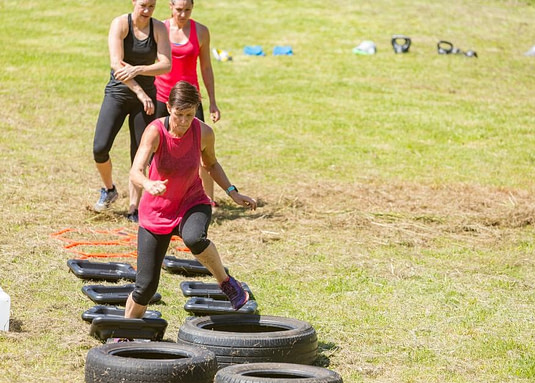
I'm not the only one who has noticed this pattern.
After discussing their diagnosis and treatment plan we’d have a long discussion about diet, healthy eating habits, and easing into physical activity to allow the body to adapt rather than trying to force it. For some, this led to more sustainable weight loss and healthier habits. But for others, the injury setback led to spiraling down, complete avoidance of activity, and weight gain through stress eating. I don’t want that to be you.
Rehabbing overuse injuries is my jam, but the ultimate goal is to avoid them in the first place. Be the tortoise, not the hare! Be honest with yourself about your regular physical activity levels before jumping into more physical activity. Tissues take time to adapt, and they don’t care how motivated you are in the new year or how many David Goggins podcasts you’ve listened to. Neuromuscular changes start quickly leading you to feel stronger within a few weeks, but muscle growth isn’t noticeable for at least 6 weeks. Bones, tendons, & ligaments take closer to 3 months to start adapting and the change is slow after that.
For long-term health, think about taking baby steps in increasing physical activity to help avoid any giant steps backward.
“High-Intensity Interval Training” Classes are Overrated (especially for beginners)
Boot camps and over-zealous personal trainers were the worst offenders for filling up my clinic, but a close second were the alleged High-Intensity Interval Training (HIIT) gyms. Many gyms and clubs have seized on the idea of "HIIT" as a way to burn calories and get in shape as fast as possible. These 45 - 60-minute “HIIT” classes combine a little steady-state exercise with a lot of HIIT and some resistance exercise. Some promote EPOC - excess post-exercise oxygen consumption - and claim that it will increase calories burned for up to 36 hours after your class, despite research showing this only lasts about an hour and overall doesn’t burn more calories than steady-state cardio.
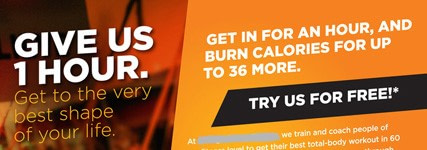
A typical ad over-promising calories burned.
Most of these classes have greatly misrepresented the actual HIIT research published by folks like Dr. Martin Gibala. At the smallest dosage, Dr. Gibala has shown that a 1-minute workout can improve markers of fitness. Of course in reality it’s a bit more involved than just exercising for 1 minute, with the 1-minute program involving a 2-minute warm-up, 20 seconds of higher intensity work followed by about a minute of recovery repeated for 3 sets, and a short cool-down. A more typical HIIT workout would be a 1-minute hard interval followed by a 1-minute rest, repeat for 10 total intervals - a 20-minute workout.
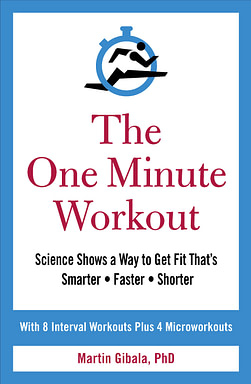
Such short workouts would be hard to market and sell for a gym, but they are great news for anyone wanting to improve their fitness. If you enjoy short, intense workouts, go for it! But remember, these should be short workouts. Trying to do high intensity for too long often leads to two issues; one - see my comments on overuse injuries above, and two - true high intensity can’t be done for more than a few minutes for even highly trained people. If you’re holding that effort for minutes at a time, you’re not actually at high intensity anyway.
Try Eating some Exercise Snacks (Real H.I.I.T. is Under-rated)
Like my weight, my fitness level has gone up and down over the years. The only good news about being out of shape is that it doesn’t take much physical activity to count as resistance training or moderate aerobic activity. We shouldn’t pretend that exercise for weight loss is a great thing, but in our effort to lose body fat, we’ll gladly accept more calories burned.
If you are significantly out of shape and/or overweight, realize that getting winded while climbing a flight of stairs might count as intense exercise. 20 seconds worth of stair climbing, repeated several times throughout the day, equals an actual HIIT workout without having to pay for a gym membership.

Those small efforts can start priming the exercise pump, preparing you to gradually handle more and more moderate-intensity exercise as your better nutrition helps your weight loss efforts.
Let me be extra clear in case I’m sounding hypocritical - If you’re overweight, you’ll benefit from losing fat whether you exercise or not. You can also benefit from exercising, whether you lose weight or not. The biggest benefits come from doing both, but your primary focus for losing weight should be through healthier eating.
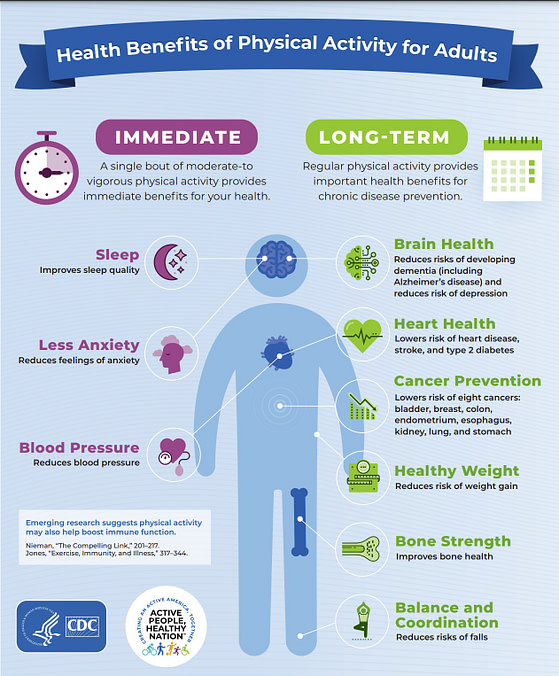
Dr. Robert Butler once said, “If exercise could be packaged in a pill, it would be the single most widely prescribed and beneficial medicine in the nation.” Research has also shown a dose-response relationship with moderate aerobic activity and visceral fat loss…the fat surrounding the internal organs in the belly is a higher risk for heart disease than peripheral fat in the arms and legs. Note that the aerobic activity in that article is brisk walking or slow jogging…not “orange” or other colored zones, burpees, battle ropes, or hill sprints.
The Most Important Exercise During (not for) Weight Loss Is…
Resistance training! Although we speak about losing weight, all we really want to lose is adipose tissue, aka body fat. We’re interested in improving body composition, less fluffiness while maintaining (or gaining) muscle mass. Cutting calories enough can lead to reducing body fat, but can also lead to losing fat-free mass, such as muscle tissue. Higher muscle mass increases your metabolism, helps with movement, decreases injury risk, increases sports performance, and is associated with a longer life span.
Many people who do extreme dieting or prolonged calorie restriction lose quite a bit of muscle and possibly even bone density. If they fall off the wagon and regain weight, it’s mostly body fat, worsening their body composition and health overall, and making it harder to lose weight again in the future.
You only need a few things to maintain your muscles, adequate protein intake (discussed above) and resistance training. I’ve read that moderate aerobic activity like brisk walking can help maintain muscle mass, but strength can still drop if you only work on cardiovascular endurance-type activities.
Strength training exercises can include bodyweight exercises, as well as resistance band exercises, and possibly some weight lifting. Designing strength training plans is the majority of my business these days and something I’d be happy to discuss with you or refer to great certified personal trainers I know personally who can help. But here are a few simple exercises that you can start with at home and I’ll note modifications to make them more accessible.
The overall goal is to work each major muscle group / motion several times a week, several sets per workout, in a low to moderate rep range, 4 - 8 reps better for strength (may require resistance) and 10 - 15 reps better for maintaining muscle mass. Do just 1 exercise from each category below, and when in doubt do enough reps to feel some fatigue.
Hip Hinging / Posterior Chain / Glutes & Hamstrings
Glute Bridging
Hip Hinging - this can take some practice, but should be a fundamental human movement. Ease into it and focus on form.
Kickstand Deadlift - only once you've mastered the hip hinge above and can handle 3 sets of 10 repetitions should you try this one, starting with no weight.
Squat / Anterior & Posterior Chain / Quads
Chair of Death - scary name, but actually easier on your knees than typical squats for most people. This version uses the hips and knees equally. If this is too hard for a starting point, instead perform repetitions of getting up and down from a chair until feeling some fatigue.
Split Squats - this one can be tricky from a balance standpoint. Feel free to do it near a steady object you can hold onto.
Lower Leg / Calves
Calf Raises - Ok, this video starts at an advanced level with eccentric calf raises where the lowering phase is slowed down. I recommend starting instead with double leg calf raises taking 1 - 2 seconds to go up and the same for down. Once you can handle 3 x 15 of double leg, you can try this single version.
Core / Anterior & Side Chain
Kneeling Plank - if you need to make it a little easier, do it on your hands instead of elbows like in a kneeling push-up position.
Kneeling Side Plank
High Plank
Pushing / Shoulders/Chest/Triceps
Modified Push-ups - No problems with starting on your knees and limiting your range of motion. The next video down may be even easier.
Incline Push-ups
Pulling / Upper Back / Biceps
Band Pull Aparts
Band Rows
Bent Over Rows - if you don't have dumbbells, consider a gallon jug (full of water ~ 8 pounds), detergent bottle, or a backpack loaded with books.
Summary
Fat shaming helps no one and you can love your body while still wanting to improve your health and fitness. Most of America needs to do this! To lose weight, focus on consuming less calories while eating more whole foods. There are many different options to do this and you need to find what works for you, whether it looks like Mediterranean, keto, vegetarian, intermittent fasting, etc.
Less intense exercise such as brisk walking is enough to help burn fat in the abdominal area, with a lower risk of injury and lower cost than “HIIT” gyms. Working multiple muscle groups with resistance training can maintain metabolically active muscle mass and strength while you lose weight. While I recommend starting simple and progressing slowly, I also recommend being very consistent for months so that you can see and feel the results.
Resources:
I'm not necessarily recommending or endorsing any of these people or fully agreeing with their views, but they are some of my favorite sources for information about nutrition, fitness, and health. You may enjoy them too.
In no particular order:
Disclaimer
This website provides information only, and does not provide any financial, legal, medical or psychological services or advice. None of the content on this website prevents, cures or treats any mental or medical condition. You are responsible for your own physical, mental and emotional well-being, decisions, choices, actions and results. PR MD Running disclaims any liability for your reliance on any opinions or advice contained in this website. Kasey Hill MD is a medical doctor & running coach, but he is not your doctor or coach unless you become his patient or client by booking a medical or coaching consult, and he is not offering medical advice on this website. If you are in need of professional advice or medical care, you must seek out the services of your own doctor or health care professional.
